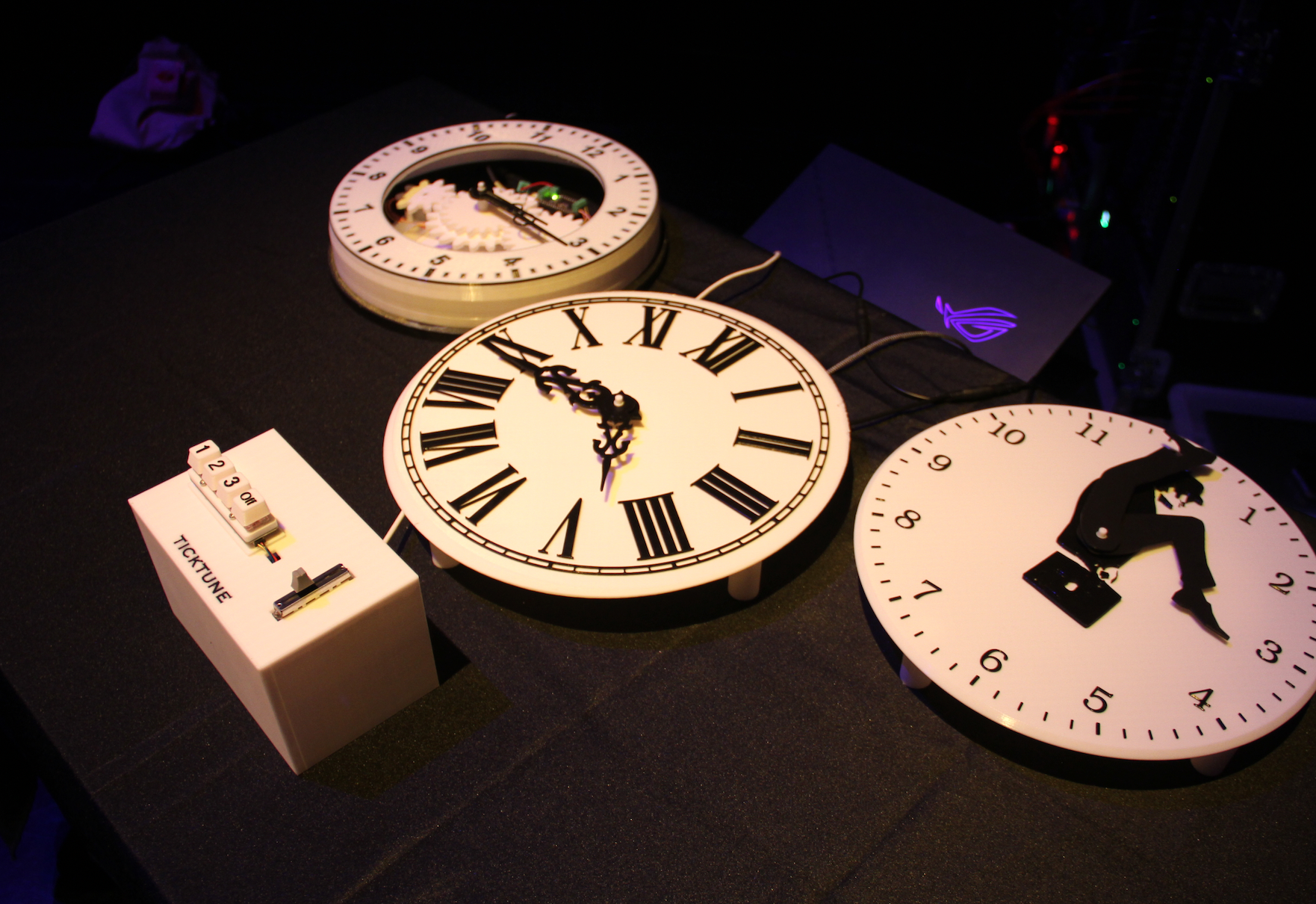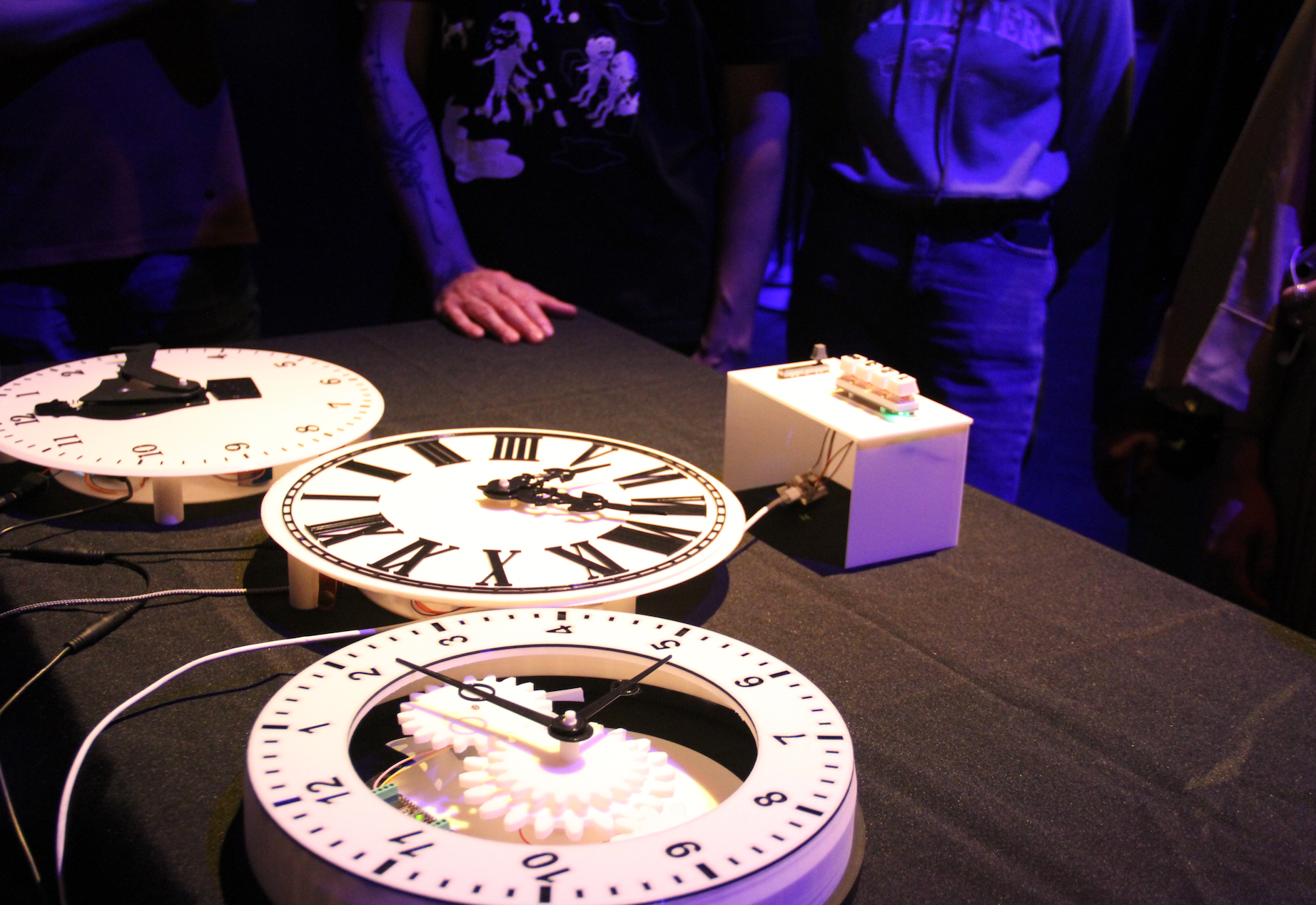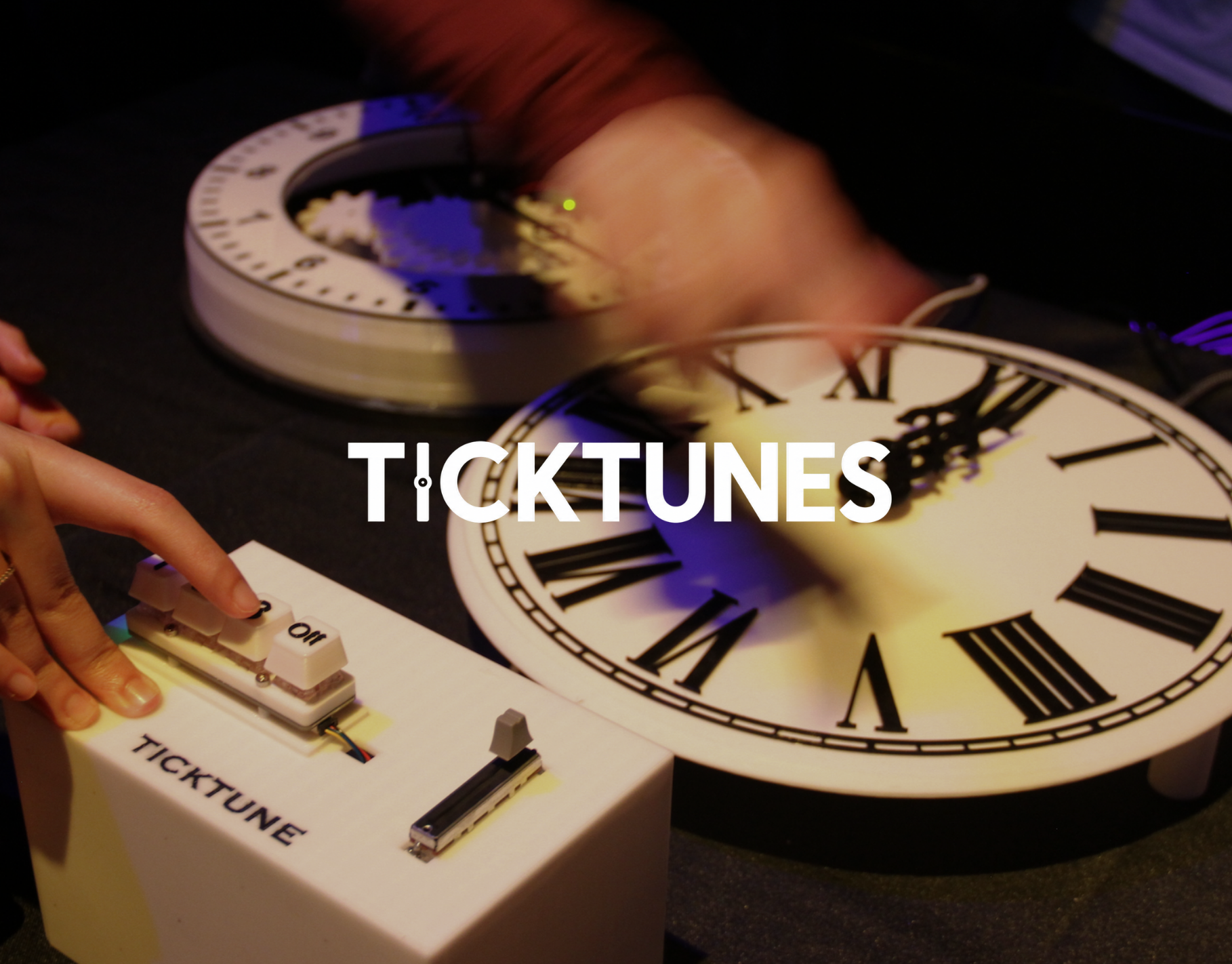
TickTune is an interactive installation that transforms the concept of time into a multi-sensory experience. Inspired by traditional clock mechanisms and contemporary music practices, the project invites users to explore the rhythm of time through both sound and motion. Each clock in the system represents a unique sonic identity, ranging from bell tones to synthesized chimes, creating a layered soundscape that reflects different interpretations of time.
At its core, TickTune brings together experimental sound design and mechanical sculpture. It draws on traditions in ambient and generative music where repetition and variation shape the experience. It also reflects hands-on approaches found in modular synthesizers and analog music-making tools where physical interaction is central. By synchronizing gear rotation with melodic rhythm the piece reimagines ticking as a poetic performance.
Explanation of the User Interaction
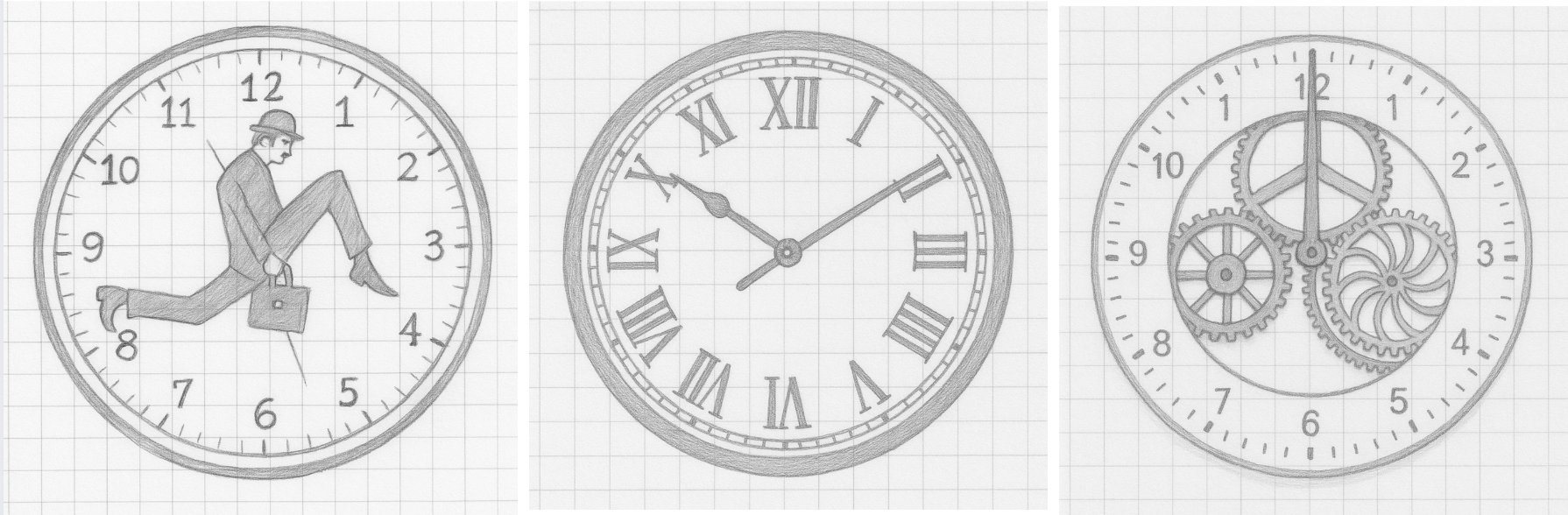
The physical form of TickTune began as a series of hand sketches. We started by imagining how each musical clock might look and move, thinking carefully about gear sizes, button placement, and how users would physically engage with the system. These sketches were then translated into digital 3D models using Fusion 360. Once the forms were finalized, we used PLA filament to print the components using the Prusa XL, a reliable large-format 3D printer. The use of PLA allowed us to achieve lightweight but durable parts that could handle the stress of repeated mechanical movement. The result is a tactile, sculptural object that invites users to touch, listen, and observe.
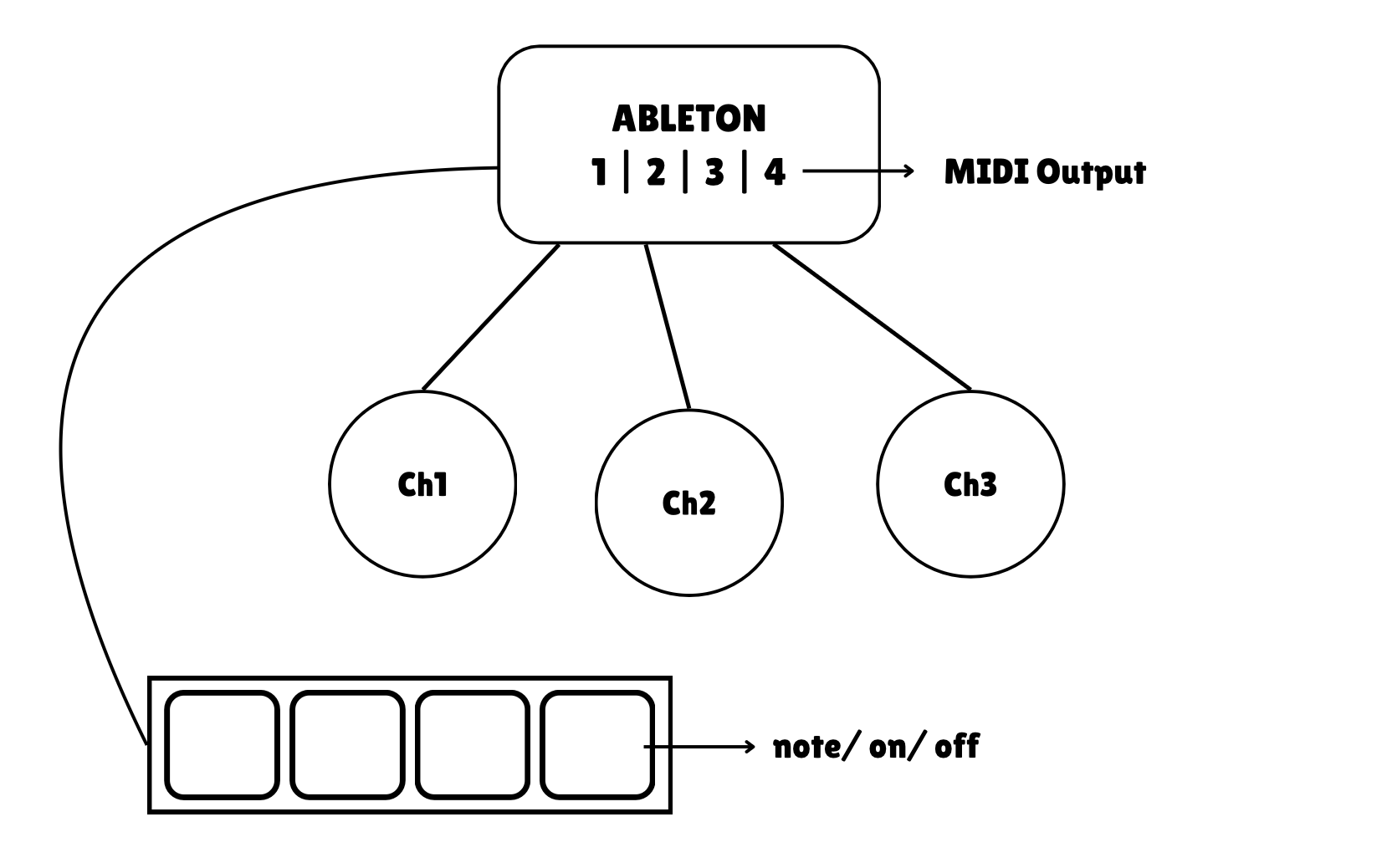
TickTune is built through a combination of software and hardware systems. The software side uses Ableton Live with four MIDI tracks. The first three tracks are instrument layers representing different clock sounds. The fourth handles the MIDI input coming from the hardware controller. Each button on the hardware is mapped to a separate MIDI channel and triggers specific sound events. The slider sends control change messages to adjust the global tempo in real time.
On the hardware side we use a CircuitPython-compatible microcontroller such as the Adafruit Feather. The inputs come from a NeoKey keypad and a slider component. Outputs go to three stepper motors connected to separate gear mechanisms. When a button is pressed the corresponding clock melody begins and the matching gears start rotating. The slider adjusts how fast or slow the motors spin based on the tempo selected. This creates a one-to-one relationship between sound and motion.
TickTune: A Musical Clock By: Jason Xia, Batool Al Tameemi, Marija Tomevska, Zhaniya Korpebayeva